


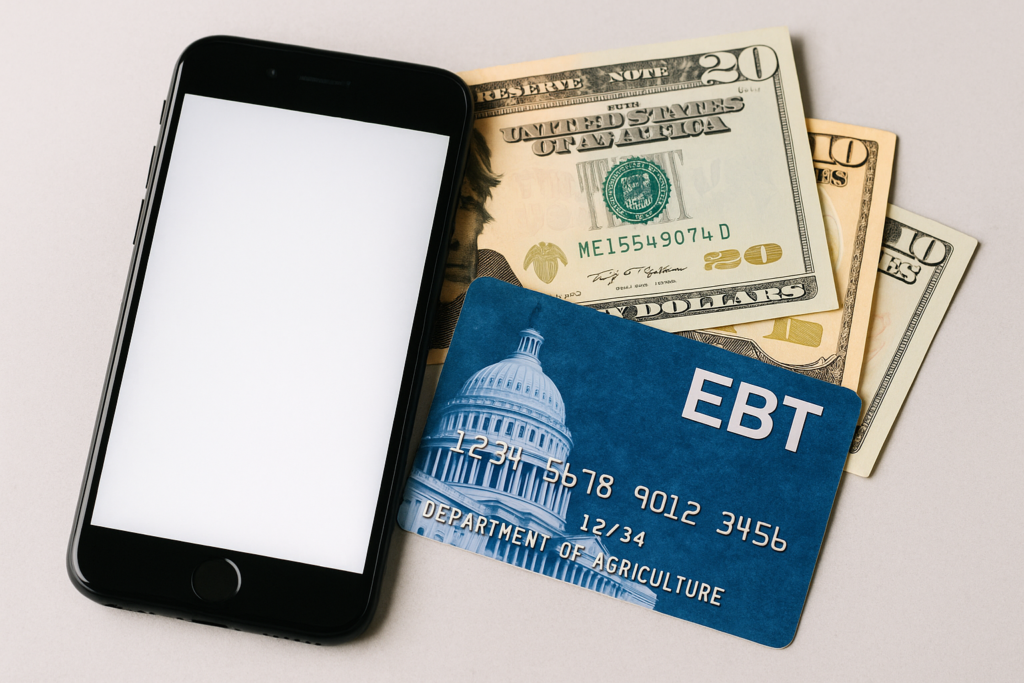

Quick Answer
Yes. If you receive SNAP (food stamps), you qualify for the federal Lifeline program, which can provide free or heavily discounted cell phone service and often a free smartphone from participating carriers. The separate Affordable Connectivity Program (ACP) that boosted benefits ended in 2024, but Lifeline is still active nationwide. Apply through the National Verifier, then choose a provider that serves your area.
How SNAP makes you eligible
Lifeline is a long-running FCC program that lowers the cost of phone or internet service for low-income households. Participation in SNAP (Supplemental Nutrition Assistance Program) is a categorical qualifier for Lifeline, so you don’t need to meet a separate income test if you can show current SNAP enrollment. One Lifeline discount is allowed per household, not per person, and you can apply it to either a mobile phone plan, a landline, or certain home internet plans.
Other ways to qualify include Medicaid, Supplemental Security Income (SSI), Federal Public Housing Assistance (Section 8/FPHA), Veterans Pension or Survivors Benefit, and specific Tribal assistance programs. You can also qualify based on income if your household income is at or below 135% of the Federal Poverty Guidelines. If you live with roommates or in group housing, separate “economic units” at the same address can each qualify; a Household Worksheet documents this during application.
What you actually get with a free government phone
The core benefit is a monthly service discount—typically up to $9.25 per month off eligible service, or up to $34.25 on qualifying Tribal lands. Many wireless providers convert that discount into a no-cost plan that includes unlimited talk and text plus a data allotment, and they often include a free entry-level Android smartphone for new enrollees. Exact plan details vary by carrier and state. Some providers support bring-your-own-phone options if your device is compatible, and you can usually keep your number.
Common plan features you may see:
- Unlimited talk and text, with data ranging from a few GB to “unlimited” (high-speed data may slow after a set threshold)
- Hotspot use, depending on the carrier and plan
- Free SIM and activation
- Low-cost device upgrades if you want a better phone than the free model
Usage rules matter: you must use your Lifeline service at least once every 30 days (a call, text, or data session), or your provider will send a 15‑day notice before de‑enrollment for non‑usage. You must also recertify your eligibility every year. The benefit is non‑transferable and limited to one per household.
ACP status in 2026 and what it means
The Affordable Connectivity Program (ACP), which previously added a separate internet discount and boosted many carriers’ phone bundles, stopped accepting new enrollments in 2024 and fully lapsed when funding ran out. There is no active federal ACP benefit at this time. Lifeline remains available nationwide, and some states or carriers offer their own low‑income plans or state-level Lifeline enhancements (for example, California LifeLine). Always check the latest offer details with your chosen provider, since plan structures changed after ACP ended.
Eligibility checklist
You are eligible for Lifeline if any of the following are true:
- You participate in SNAP (food stamps)
- You participate in Medicaid, SSI, Federal Public Housing Assistance (Section 8/FPHA), Veterans Pension or Survivors Benefit, or certain Tribal programs (BIA General Assistance, Tribal TANF, Food Distribution Program on Indian Reservations, or Tribal Head Start for households that meet the income standard)
- Your household income is at or below 135% of the Federal Poverty Guidelines
Key rules:
- One benefit per household (mobile, landline, or qualifying home internet). A household is people who live together and share income and expenses.
- Separate economic units at the same address can each receive Lifeline. Use the Household Worksheet during application if this applies.
- You can transfer your benefit to a different participating provider once per month if you prefer another plan.
Documents you’ll need
Having the right paperwork speeds approval through the National Verifier:
- Identity: government-issued photo ID (driver’s license, state ID, Tribal ID, passport) and the last four digits of your SSN or full Tribal ID
- Address: a physical residential address. If you don’t have a permanent address, a temporary address, shelter address, or descriptive location is acceptable; your provider will guide you through the form
- Proof of program participation (if qualifying through SNAP or another program): a letter or electronic benefit statement showing your name, the program name, and that your benefit is current (for example, a SNAP award letter dated within the past 12 months or a current benefits portal screenshot)
- Proof of income (only if qualifying by income): a recent tax return, three consecutive pay stubs, Social Security benefit statement, unemployment or workers’ comp statement, or similar official documents
Step-by-step: How to apply and get a phone
- Check eligibility. If you’re on SNAP, you’re already eligible for Lifeline. Confirm your name and address on SNAP records match what you’ll use to apply.
- Gather documents. Have your SNAP award letter or a current online portal screenshot, plus your ID.
- Apply via the National Verifier. Go to the official Lifeline application at nv.fcc.gov/lifeline. You can also mail a paper application through the Universal Service Administrative Company (USAC) if needed.
- Choose a participating provider. After approval, pick a carrier that offers Lifeline service in your state. Many let you apply on their site and link to your National Verifier approval.
- Complete carrier enrollment. Select whether you need a new phone or will bring your own. If you want to keep your number, have your account number and transfer PIN from your current carrier ready.
- Activate your service. Your SIM and phone usually arrive within 5–10 business days. Follow the enclosed steps to activate and place a test call.
- Use your service monthly and recertify annually. Watch for texts or emails from your provider about recertification windows and any address verification requests.
Top Lifeline providers and typical offers
The examples below reflect common plan structures. Exact availability, data amounts, and phone models depend on your state and the carrier’s current inventory.
| Provider | Underlying network | Typical Lifeline plan | Free phone offer | Where available | How to apply |
|---|---|---|---|---|---|
| Assurance Wireless | T-Mobile network | Unlimited talk/text; data allotment varies by state; hotspot may be included | Entry-level Android smartphone for new accounts | Most states | Online application or phone support; link National Verifier approval |
| SafeLink Wireless | Primarily Verizon | Unlimited talk/text with a monthly data bucket; larger allowances in some states | Free Android smartphone in many markets | Most states | Online, phone, and select retail partners |
| Q Link Wireless | T-Mobile (varies by market) | Unlimited talk/text; data with speeds reduced after threshold | Free smartphone for eligible new signups; BYOP supported | Many states | Online with National Verifier integration |
| Life Wireless | AT&T or T-Mobile (varies by state) | Unlimited talk/text with data; optional low-cost upgrades | Free Android smartphone where available | Many states, including Tribal lands | Online or phone; National Verifier required |
| AirTalk/Cintex Wireless | AT&T/T-Mobile (varies) | Unlimited talk/text with data; offers change frequently | Free smartphone; occasional refurbished brand-name models | Selected states | Online application with document upload |
Note: California operates an enhanced California LifeLine program that can stack with federal Lifeline through specific carriers and may include larger plan allowances. Tribal lands may receive higher monthly discounts, which providers often convert into richer plans.
Costs, fees, and fine print
Lifeline service is designed to be free or very low cost when applied to a mobile plan from a participating carrier. Be aware of potential add-ons:
- Device upgrades: the base phone is free, but a newer model may carry a one-time upgrade fee
- Taxes/fees: some states assess minimal telecom fees; many providers cover these, but not all
- International calling: usually not included; some carriers sell add-on packs
- Data management: plans with hard caps may slow or stop high-speed data after you hit the limit
Troubleshooting common issues
If your application is denied or delayed, these fixes usually help:
- Name or address mismatch: ensure your SNAP records match your ID and National Verifier application. Update your SNAP case if needed.
- Outdated proof: submit a current SNAP document or a benefits portal screenshot with your name and recent date visible.
- Duplicate household flag: complete the Household Worksheet to show you are a separate economic unit at the same address.
- PO Box only: provide a physical service address and use the PO Box for mailing if needed. If you’re unhoused, ask the provider about acceptable temporary address options.
- Porting your number: get your current account number and transfer PIN from your existing carrier before starting Lifeline enrollment.
How to choose the right provider
Coverage and plan details should drive your choice more than the headline “free phone.” Compare:
- Network strength where you live and work (T-Mobile, Verizon, or AT&T, depending on the provider)
- Monthly high-speed data amount and whether hotspot use is allowed
- Device policy: free model availability, upgrade costs, and bring-your-own compatibility
- Customer support options: online chat, call center hours, and the process for replacing a lost phone or SIM
- State-specific enhancements (California LifeLine, Tribal benefits)
Keeping your benefit active
After activation, place at least one call, send a text, or use mobile data every 30 days so your account registers activity. Keep your contact information up to date and watch for annual recertification notices—missing the window can lead to a service interruption. If your household situation changes (you move, lose SNAP, or no longer share expenses with someone), update your records through your carrier and the National Verifier. You can switch Lifeline providers once per month if you find a better fit.
If you don’t qualify through SNAP
You may still get Lifeline by meeting the income threshold or qualifying through another program like Medicaid or SSI. If Lifeline isn’t an option, consider these low-cost alternatives:
- Entry-level prepaid plans from major networks and their discount brands (for example, low-cost “Connect” plans with set data amounts)
- Refurbished or certified pre-owned devices from reputable sellers or carrier discount programs
- Local assistance resources: call 211 or check EveryoneOn.org for community programs that reduce telecom costs
Safety and scam awareness
Apply only through the official National Verifier or a known Lifeline provider. There is no application fee, and you should not be asked to pay to prove eligibility. Be wary of social media ads promising “free iPhones for everyone” or requests to share your SSN in a direct message. Legitimate providers verify identity through secure portals and provide written disclosures about Lifeline terms and your right to transfer service.
Timeline: from approval to phone in hand
Most applicants receive National Verifier decisions within minutes when submitting online with clear documents. If additional review is needed, it can take a few business days. After you enroll with a provider, shipping for a phone and SIM typically takes 5–10 business days, though some carriers offer expedited shipping or in-store pickup in select areas. Activation usually takes a few minutes once you insert the SIM and follow the setup steps.
Bottom line
If you’re on SNAP, you can get a free or very low-cost cell phone plan—and usually a free smartphone—through Lifeline. Start with the National Verifier, pick a provider with strong coverage and a plan that fits your needs, and keep your account active with monthly use and annual recertification. Even without the now-ended ACP, Lifeline remains a reliable way to cut your wireless bill.
Frequently Asked Questions
Do food stamps (SNAP) automatically qualify me for a free government phone?
Yes. SNAP participation makes you categorically eligible for the Lifeline program. Once approved, many providers offer a no-cost plan and a free smartphone for new customers.
Is the Affordable Connectivity Program (ACP) still available?
No. The ACP ended in 2024 when funding lapsed, and there is no active federal replacement at this time. Lifeline is still available nationwide, and some states have their own supplemental programs.
Can more than one person in my household get a Lifeline phone?
No. Lifeline is limited to one benefit per household, not per person. However, separate economic units at the same address (for example, unrelated roommates who don’t share income and expenses) can each qualify by completing a Household Worksheet.
What kind of phone will I receive?
Most carriers provide a free entry-level Android smartphone for new enrollments, subject to inventory. Models change frequently. If you prefer, you can bring your own compatible phone and receive a free SIM and service instead.
How long does approval take, and when will I get my phone?
Online National Verifier approvals often happen the same day, sometimes within minutes. After you pick a provider, shipping usually takes 5–10 business days. Activation is quick once your SIM and phone arrive.
What if I lose SNAP—do I lose my Lifeline service immediately?
Not immediately. You must be eligible at the time of your annual recertification. If you lose SNAP, you may still qualify through another program or by income. Update your provider and complete recertification with the new documentation.
Can I switch Lifeline providers if I find a better plan?
Yes. You can transfer your Lifeline benefit to another participating provider once per month. Complete the new provider’s enrollment, and they will handle the transfer after you consent.

