


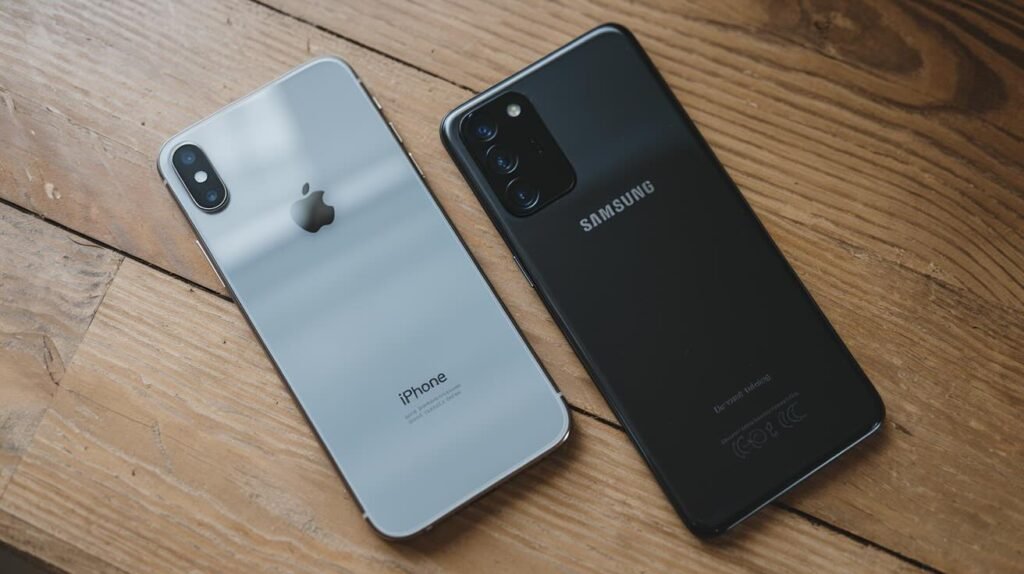

Free phones through government programs like Lifeline and ACP can be a big help for many families. These plans aim to give low-income individuals access to reliable technology, including iPhones and Samsung smartphones.
iPhones, such as the iPhone 7 or even newer models like the iPhone 13, are praised for strong security and smooth updates. On the other hand, Samsung phones like the Galaxy Z Flip or S9+ stand out with larger screens and more storage options.
Providers like AirTalk Wireless or Cintex Wireless keep this program running smoothly by offering easy applications online with proof of eligibility required. Availability depends on location and stock—popular devices may sometimes be limited.
So, who has the edge—iPhone or Samsung? Keep reading to find out which one is right for you!
Key Takeaways
- Free government phone programs like Lifeline and ACP help low-income individuals get free iPhones or Samsung phones. Eligibility often depends on income or participation in programs like Medicaid, SNAP, or WIC.
- iPhones are known for smooth performance, long-term updates, and tight security. Models available include the iPhone 7, XR, 11, and even newer options like the iPhone 13.
- Samsung phones offer flexibility with Android’s features. Models include Galaxy Z Flip, Z Fold, and S9+, focusing on larger screens and expandable storage options.
- Providers such as AirTalk Wireless, Cintex Wireless, SafeLink Wireless, Q Link Wireless, and others make these devices accessible through simple online applications requiring proof of eligibility.
- Device availability depends on location and stock levels; high-demand models may be limited with some providers under Lifeline’s offerings.
Understanding The Free Government Phone Programs
Free government phone programs help people with limited income get smartphones. These programs aim to keep everyone connected without breaking the bank.
What is Lifeline?
Lifeline is a government assistance program. It helps low-income individuals stay connected. The program offers discounts on phone or internet services. Qualified people may also receive free cell phones from select providers.
Communication should never be a luxury, says Lifeline’s initiative. This support is crucial for job searches, accessing healthcare, and staying in touch with loved ones. Eligibility often depends on income level or participation in programs like Medicaid or SNAP.
Who Qualifies?

Eligibility depends on income or participation in government assistance programs. Households with incomes at or below 135% of the Federal Poverty Guidelines qualify.
Participation in programs like Medicaid, SNAP, SSI, and WIC also makes you eligible. Veterans Pension and Tribal programs count too. Proof of eligibility is required to apply for a free cell phone program.
How Do You Get a “Free Phone”?
To get a free phone, you must apply through an approved Lifeline provider. Start by visiting their website or calling their customer service. Provide personal details like your name, address, and proof of eligibility.
Documents like Medicaid cards or SNAP approval letters usually work.
Choose a device if options are available. Many programs offer iPhones or Samsung models based on availability and location. Once approved, phones ship directly to your home for convenience.
Some providers process requests quickly, while others take weeks to complete the application.
Top Providers Offering Free iPhones and Samsung Devices
Several providers offer free iPhones and Samsung phones under government programs. Each company has different options and models, giving you choices based on availability.
AirTalk Wireless
AirTalk Wireless provides free government phones through the Lifeline and Affordable Connectivity Programs. They offer devices like iPhones and Samsung models for low-income individuals.
Eligibility depends on income or participation in assistance programs like Medicaid or SNAP.
Popular options include iPhone 7, 8 Plus, XR, and Samsung Galaxy S9+. AirTalk also includes plans with unlimited talk, text, and data. Their process is easy—apply online by showing proof of eligibility.
Cintex Wireless
Cintex Wireless stands out in the free government phone program. They offer high-quality smartphones through Lifeline and the Affordable Connectivity Program. These options support low-income individuals, helping them stay connected.
Eligible users can receive free iPhones or Samsung devices with unlimited talk, text, and data plans. Some popular Apple models include iPhone 7 and iPhone 8 Plus. For Samsung lovers, Galaxy Z Flip is available too.
Cintex focuses on providing great options to fit different needs without extra hassle.
NewPhone Wireless
NewPhone Wireless helps low-income individuals get free government phones through the Lifeline phone program. They offer smartphones like iPhones and Samsung Galaxy models to eligible users.
The application process is simple and fast. Applicants need proof of income or participation in programs like Medicaid or SNAP. Services include unlimited talk, text, and data plans with no hidden fees.
SafeLink Wireless
SafeLink Wireless offers free phones under government programs like Lifeline and ACP. Eligible users get a smartphone, talk time, text, and data benefits without extra costs. This is perfect for low-income individuals needing reliable communication tools.
It provides various devices, including popular iPhone and Samsung models. Availability depends on your location and qualification criteria. SafeLink also supports services like Medicaid or SNAP to help people gain access effortlessly.
Gen Mobile
Gen Mobile focuses on affordable plans for low-income users through the Lifeline phone program. They provide free smartphones and discounted services to eligible individuals. Their plans include unlimited talk, text, and data options to suit basic needs.
They offer both iPhones and Samsung devices under their program, depending on availability. Eligibility depends on income level or participation in assistance programs like Medicaid or Supplemental Nutrition Assistance Program (SNAP).
Gen Mobile aims to bridge the technology gap with reliable mobile services for underserved communities.
Assurance Wireless
Assurance Wireless is a major provider in the free government phone program. It operates under both Lifeline and the Affordable Connectivity Program, helping low-income individuals stay connected.
They offer free smartphones with unlimited texts, calls, and data plans for eligible users.
Their device options often include reliable Android models. Customers benefit from partnerships with T-Mobile’s network for wide coverage across the U.S. Eligible people may qualify through programs like Medicaid, SNAP, or Supplemental Assistance benefits.
Q Link Wireless
Q Link Wireless offers free government phones through Lifeline and ACP programs. It helps low-income individuals stay connected by providing smartphones with unlimited talk, text, and data in some cases.
The service works nationwide using major networks for coverage.
Users can get devices like iPhones or Samsung phones depending on availability. Eligibility often requires proof of participation in Medicaid, SNAP, or similar programs. The application process is simple and can be done online at no cost to the user.
Device Availability and Models in the Free Phone Program
You can get both iPhone and Samsung models through the free phone program. Device options vary based on availability and your eligibility.
iPhone Models Offered
Free government programs offer many iPhone models. Options include the classic iPhone 6 Plus and compact SE (1st and 2nd gen). Newer models like the XR, 11, 12, and even the sleek iPhone 13 are also available.
More basic choices include the reliable iPhone 7 or larger-screened iPhone 8 Plus. Both cater to different user needs. Even older devices like the iPhone 6s and its Plus version remain part of these programs for those who prefer them.
Samsung Models Offered
The Galaxy Z Flip is sleek and compact. It folds in half, fitting neatly in your pocket. This phone has a unique design and offers solid performance for multitasking or streaming videos.
The screen is vibrant, making movies and photos look sharp.
The Galaxy Z Fold takes things up a notch with its large foldable display. You can use it as both a tablet and smartphone, perfect for productivity or gaming fans. Meanwhile, the Galaxy S9+ boasts strong camera features and fast processing speeds ideal for everyday tasks like browsing or taking clear pictures on-the-go!
Factors Influencing Device Allocation
Device availability depends on stock and the phone model’s popularity. High-demand options like iPhone 12 or Galaxy Z Flip may be limited, especially with certain providers. Supply can vary based on location and funding under programs like Lifeline or Affordable Connectivity Program.
Income qualifications play a big role too. Applicants meeting Medicaid, Supplemental Assistance, or other low-income criteria often get better priority. Providers also consider user needs—some offer older models for basic users while reserving advanced devices for those needing more features.
Free Government iPhone vs. Samsung Key Features Comparison Table
| Feature | Free Government iPhone | Free Government Samsung |
|---|---|---|
| Operating System | iOS – smooth, secure, and optimized | Android – customizable and flexible |
| User Interface | Simple, consistent UI, less customization | Highly customizable (themes, widgets, launchers) |
| Build Quality | Premium materials, solid feel | Varies by model (mid-range to premium build) |
| Available Models (Common) | iPhone 7 Plus, iPhone 8, iPhone SE, iPhone 12 Mini | Samsung Galaxy A14 5G, Galaxy A03s, Galaxy A13 |
| Camera Quality | Typically excellent, even in older models | Good to very good (depends on model) |
| Software Updates | Regular iOS updates for several years | Varies by model, some models get slower or fewer updates |
| Storage Options | Fixed internal storage (64GB–128GB), iCloud backup | Expandable storage via microSD card (varies by model) |
| Battery Life | Generally good, optimized by iOS | Often larger batteries, may last longer on some models |
| Charging | Lightning cable, wireless charging (on newer models) | USB-C charging, some support fast charging |
| Security Features | Strong privacy controls, Face ID or Touch ID | Secure Folder, fingerprint scanner, facial recognition (varies) |
| 5G Support | Supported on newer models (e.g., iPhone 12 Mini) | Many models include 5G (e.g., Galaxy A14 5G) |
| Mobile Hotspot Capability | Often included if plan allows | Often included if plan allows |
Pros and Cons (iPhone vs Samsung)
Free Government iPhone – Pros & Cons
| Pros | Cons |
|---|---|
| ✅ Smooth and fast performance with iOS | ❌ Limited customization options |
| ✅ Regular and long-term software updates | ❌ No expandable storage (fixed internal memory only) |
| ✅ Great camera quality even in older models | ❌ Uses Lightning cable (not USB-C) |
| ✅ Strong security (Face ID, Touch ID, privacy controls) | ❌ Repairs and replacements can be expensive |
| ✅ Seamless integration with other Apple devices | ❌ Fewer budget models in circulation |
Free Government Samsung – Pros & Cons
| Pros | Cons |
|---|---|
| ✅ Highly customizable interface | ❌ Security updates might lag behind iPhones |
| ✅ Most models offer expandable storage | ❌ Software updates may be slower or less frequent |
| ✅ Usually come with larger screens and bigger batteries | ❌ Some budget models may have bloatware |
| ✅ USB-C charging (standardized and fast) | ❌ Slightly more complex for beginners |
| ✅ More models available (variety of features and specs) | ❌ Varies in build quality depending on the model |
So, Which is “Better” For You?
Choosing between a free government iPhone and Samsung phone depends on your needs. If you love smooth performance, long-term updates, and apps like FaceTime or iMessage, an Apple iPhone might suit you better.
It’s great for people who want easy-to-use features with excellent camera quality.
Samsung phones are perfect for those who value customization and flexibility. They often offer larger screens and expandable storage, which is a bonus for gaming or watching videos.
Android fans will enjoy its wide range of apps and settings to personalize their experience.
How to Apply for the Lifeline Program

Start by checking if you qualify. The program helps low-income individuals, Medicaid/MediCal recipients, and those on other assistance programs. Use your income or program-based eligibility to apply.
- Determine Your Eligibility:
- You must qualify based on either your household income (at or below 135% of the Federal Poverty Guidelines) or participation by you or someone in your household in a qualifying federal assistance program.
- Qualifying Programs Include:
- Supplemental Nutrition Assistance Program (SNAP)
- Medicaid
- Supplemental Security Income (SSI)
- Federal Public Housing Assistance (FPHA)
- Veterans Pension and Survivors Benefit
- Certain Tribal Specific Programs (for residents of Tribal lands)
- Gather Necessary Information and Documents:
- Full Legal Name
- Date of Birth
- Last 4 digits of your Social Security Number (SSN) or Tribal Identification Number
- Home Address (cannot be a P.O. Box)
- Proof of Eligibility: This could be a statement of benefits from a qualifying program, pay stubs or tax returns for income verification, or other official documents. Specific requirements can be found on the Lifeline website.
- Apply to Qualify through the National Verifier:
- This is the centralized system managed by the Universal Service Administrative Company (USAC) to check eligibility. There are three main ways to apply:
- Apply Online (Recommended): Visit the Lifeline National Verifier website (lifelinesupport.org or check the official FCC/USAC sites) and complete the online application. This is generally the fastest method.
- Apply by Mail: Download and print the Lifeline application form (available in English and Spanish on the website). Complete the form, include copies of your proof of eligibility documents (do not send originals), and mail it to the Lifeline Support Center address provided on the form. This method takes longer.
- Apply Through a Phone or Internet Company: Some Lifeline service providers can help you submit your application to the National Verifier, sometimes directly through their website or in person with an agent.
- This is the centralized system managed by the Universal Service Administrative Company (USAC) to check eligibility. There are three main ways to apply:
- Wait for Approval:
- The National Verifier will process your application and documentation to confirm your eligibility. You will be notified whether you qualify.
- Choose a Lifeline Service Provider:
- Once the National Verifier confirms you are eligible, you need to select a phone or internet company in your state that participates in the Lifeline program.
- You can find a list of participating companies in your area using the “Companies Near Me” tool on the lifelinesupport.org website.
- Enroll with Your Chosen Provider:
- Contact the company you selected and tell them you are approved for Lifeline and want to enroll in their Lifeline service plan.
- They will guide you through their specific enrollment process to apply the Lifeline discount to your service. You may also receive a free phone from them at this stage, depending on their offers.
Important Notes:
- One Benefit Per Household: Only one Lifeline benefit (either phone or internet, not both simultaneously on separate services) is allowed per household.
- State Exceptions: California, Oregon, and Texas have their own application processes. If you live in one of these states, you should check their specific state Lifeline program websites or contact providers directly for instructions.
- Annual Recertification: You must recertify your eligibility every year to continue receiving the Lifeline benefit. You will receive notifications on how and when to do this.
Alternative Options for Free iPhone or Samsung Smartphone
You have other ways to get a free iPhone or Samsung phone, so check them out for smart savings!
Carrier Promotions and Trade-In Deals
Carriers often run deals giving free phones to new customers. These offers usually require signing up for a plan. Some carriers, like T-Mobile or Verizon, bundle these with unlimited data plans.
Trade-in deals let you exchange your old phone for discounts on newer models. Providers may accept even damaged devices. For example, trading in an iPhone 8 might mean big savings on a Samsung Galaxy Z Flip through such programs.
Always check if taxes or fees apply before finalizing the deal!
Retailer Promotions
Retailers often offer discounts on smartphones through seasonal sales or clearance events. Stores like Walmart, Target, and Best Buy sometimes include free iPhone or Samsung models with select plans.
Some promotions pair phones with gift cards or extra accessories like cases or chargers. Black Friday and holiday deals can bring better savings for low-income individuals needing a smartphone.
Keep an eye out for limited-time offers that require quick action to secure these devices.
Manufacturer Rebates and Student Offers
Manufacturer rebates can save you money on devices like Samsung Galaxy and iPhone models. These offers often include cashback or discounts at checkout. For example, phone makers may lower prices during back-to-school events or holiday sales.
Some programs even combine rebates with trade-in deals for bigger savings.
Students also qualify for exclusive discounts in many cases. Brands like Apple and Samsung offer reduced prices on smartphones to those enrolled in school. Educational email addresses are usually required to access these deals.
Many times, these promotions also throw in accessories or extended warranties to sweeten the pot.
Contests, Giveaways, and Nonprofit Programs
Contests and giveaways can be a great way to get free smartphones. Many tech companies, social media influencers, or community events offer them. These often require simple participation like entering your name or engaging in online activities.
Keep an eye on announcements from phone carriers and tech blogs.
Nonprofit programs also help low-income individuals access devices. Groups like Computers with Causes or the Salvation Army work to provide phones for those in need. Check local charities or assistance resources near you for eligibility details.
Find more options below!
Refurbished and Trade-In Marketplaces
Refurbished phones can save money while offering quality devices. Many marketplaces sell iPhones and Samsung Galaxy models that work with Lifeline programs. These devices are repaired, tested, and often come with warranties.
Some popular sites include Amazon Renewed, Back Market, and Gazelle.
Trade-in deals reduce costs even more. You exchange your old phone for credit toward a new or refurbished model. This option helps low-income individuals upgrade without breaking the bank.
Conclusion
Choosing between a free government iPhone or Samsung depends on your needs. iPhones offer seamless software and reliable updates. Samsung phones bring variety and unique features like expandable storage.
Think about what fits your lifestyle best—both options have perks!
FAQs
1. Who is eligible to get a free government phone?
To qualify, you must either meet low-income requirements or participate in a federal assistance program like SNAP, Medicaid, SSI, or Federal Public Housing Assistance. Eligibility also varies slightly by state and provider.
2. What phone models are available through the government phone program?
Phone models vary by provider and availability. You may receive entry-level to mid-range smartphones such as iPhone 7, iPhone SE, Samsung Galaxy A14, LG Stylo, or similar Android devices.
3. Can I choose between iPhone and Samsung for my free phone?
Some providers may offer a choice if both options are in stock, but typically, you’ll receive the device based on availability. You can sometimes upgrade or bring your own compatible device.
4. What providers offer free government phones?
Popular Lifeline and ACP providers include AirTalk Wireless, SafeLink Wireless, Assurance Wireless, Cintex Wireless, and Q Link Wireless. Availability depends on your location.
5. Do free government phones come with free service?
Yes, most providers offer free monthly service plans that include talk, text, and data. Some even include hotspot access and international calling, depending on the plan.

